March 6, 2026
5 Questions With CMOs – Ani Avetisyan

Conversations with marketing leaders whose ideas are shaping how companies build trust, generate demand, and position themselves in increasingly competitive markets.
The goal is to create a space where marketing leaders can share how they actually think about the changes happening in the industry.
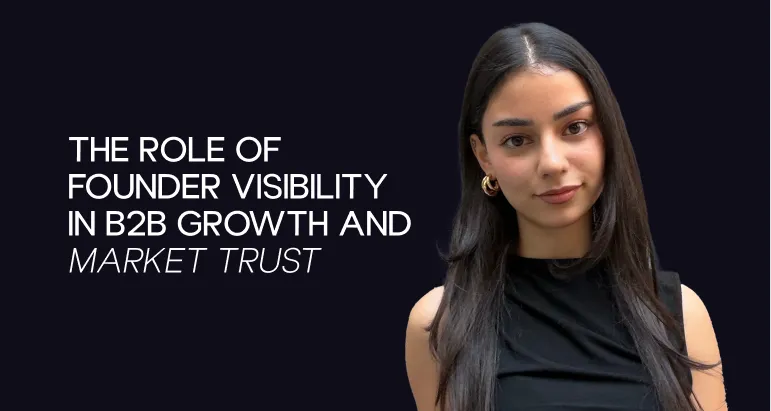
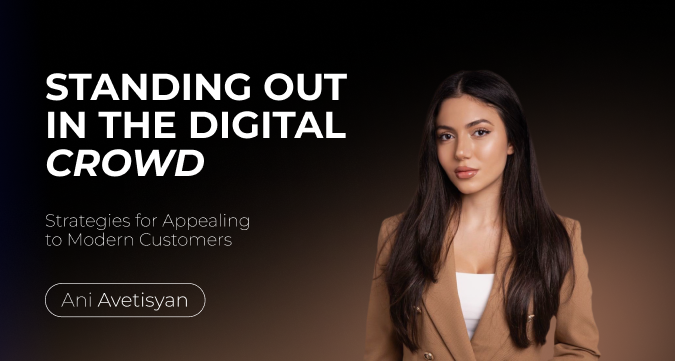
The first edition features Ani Avetisyan, Co-founder and Marketing Director of AVE Digital.
-
Where are your highest-quality customers coming from today, and how do you see that evolving by 2026?
Our highest-quality clients come almost entirely through LinkedIn, driven by long-term thought leadership and consistent visibility. We have been consistently present for years, sharing how we think, how we position companies, what we believe about marketing, and what standards we operate by. By the time our prospects reach out, they already understand our philosophy, standards, and whether we are aligned.
What’s evolving toward 2026 is a clear move away from interruption-based acquisition. Buyers no longer want to be targeted, they do the research alone and pick a service provider themselves. They look for leaders who are visible, credible, and consistent over time. In B2B especially, the decision is rarely triggered by one campaign or one ad. It’s the accumulation of presence over time.
Executive visibility, strategic content, and long-term positioning have become our primary channels for acquisition. That’s why I believe demand generation today is inseparable from leadership. If leadership is invisible, marketing has to fight much harder. If leadership is present and credible, conversations happen before persuasion even begins.
-
In your experience, what retains a customer long-term: product excellence, brand authority, or customer value management — and why?
Brand authority earns entry. It puts you on the radar and attracts the right conversations.
Product excellence creates commitment. It reassures clients that they made the right decision.
But customer value management is what creates longevity.
Our longest-standing clients stayed because we don’t operate as vendors. We act as an extension of their team, investing deeply in their goals, positioning, and long-term direction. Over time, this goes beyond marketing output, and it changes how they are perceived in their industry. And when that level of trust and shared direction is built, staying becomes the natural continuation of progress.
-
How is AI already changing your marketing organization, and what do you think most teams are still underestimating about it?
From my experience, AI has exposed the absence of real thinking and real human depth in a lot of marketing.
Many teams relied on volume as a strategy. Now that AI can generate content instantly, surface-level execution has become indistinguishable. Volume alone is no longer a differentiator.
What AI cannot replicate is perspective. It cannot replace judgment, lived experience, leadership voice, or emotional intelligence. These are the elements that make communication credible and durable.
At AVE Digital, we are proudly a people-first agency. We treat AI strictly as an assistant. A tool for efficiency, not a substitute for thinking. Our clients aren’t looking for more content. They are looking for clarity, depth, and a way to express leadership in a meaningful, human way.
-
How do you prove marketing impact to leadership today, and what metrics will matter most in 2026?
Authority-driven marketing compounds over time, it’s not instant. From the start, we align with leadership on timelines and expectations: one month, three months, six months, and beyond. What consistently follows is an impact that exceeds initial projections.
Vanity metrics are secondary. What matters are inbound conversations with the right people, partnership opportunities, speaking invitations, and sales discussions that begin with trust rather than persuasion.
These results directly influence business outcomes. Trust shortens sales cycles, recognition opens doors. By the later stages, these shifts translate into stronger pipelines, higher-quality opportunities, and measurable business growth.
-
What do you see as the biggest strategic challenge for B2B marketing leaders heading into 2026?
The challenge is no longer technological. The tools are accessible, distribution channels are clear, and production has become faster than ever. The real challenge moving into 2026 is maintaining authenticity while operating in an environment that constantly pushes toward sameness. It requires clarity of thought, the ability to articulate a distinct point of view, and the willingness of leadership to be visible and take ownership of how the company is perceived. Clear voice, consistent leadership presence, and long-term discipline in building credibility will outweigh short-term bursts of activity. In B2B especially, perception compounds over time.